







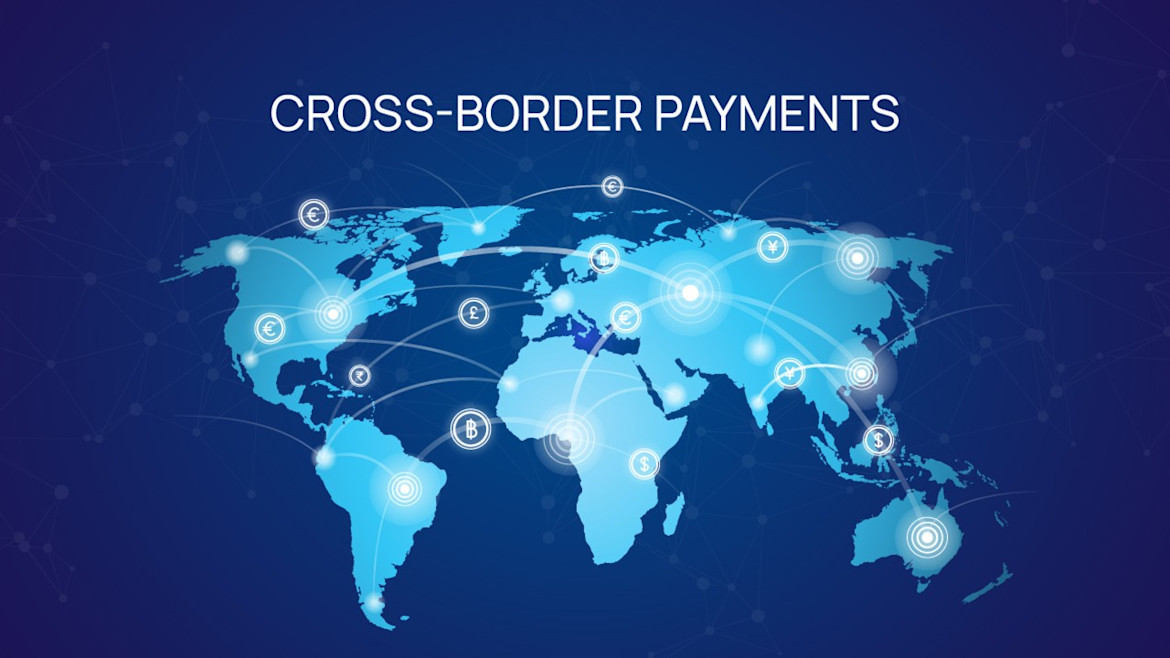
Cross-border payments are the backbone of international trade, remittances and internet business. Used by everyone from multinationals to freelancers. But for all their scale, they are complex, costly and slow compared with domestic payments.
The global market, presently valued at around $195 trillion, will reach $320 trillion by 2032. This is a paradox of growth: demand is great, but there are inefficiencies.
So, what are cross-border payments, and why are they still difficult to optimise? Let's take it apart then.
What Are Cross-Border Payments and How Do Cross-Border Payments Work
Cross-border payments are payments in which both the payer and the receiver are located in different countries.
How do cross-border payments work?
- The sender starts the transfer with a bank or payment provider.
- Money is transferred using correspondent banking networks
- FX markets offer currency conversion
- Intermediary banks conduct compliance checks (AML, KYC, penalties)
- Final settlement reaches the recipient
There is no single global payment rail as there is in the domestic system. Instead, systems rely on networks like SWIFT, connecting more than 11,000 institutions.
Important: SWIFT sends messages, not money. Money flows through layers of banking ties.
Why Are Cross-Border Payments Difficult?
The actual issue is that of structural disintegration.
The major reasons for this are that:
- Different legislation, different rules
- Risk of currency exchange
- Banks as intermediaries increase friction.
- Legacy infrastructure (non-RT)
The Financial Stability Board report outlines four major friction points:
expensive, sluggish, difficult to find, opaqu
Key Challenges of Cross-Border Payments
1. Overpriced
Why are cross-border transactions expensive?
- The costs of the intermediary banks are included
- FX conversion spreads consume value
- High cost of compliance (AML, KYC)
The average cost of remittances is about 6.2%, well over the global target of 3%.
Example: Sending $200 could cost $12–$15 in fees.
In some corridors in Africa, fees are over 30%, and this is a serious bottleneck for financial inclusion.
2. Slower Speeds
Normally, cross-border transactions will take 3-5 days.
Reasons are:
- Time zone issues
- Manual Check
- Various intermediates
Even advancements like SWIFT GPI are about better tracking, not necessarily faster settlements.
3. Issues of Transparency
Users generally don’t realise:
- Total charges
- Payment is complete
- FX rate applied
This leads to poor financial planning and trust concerns.
4. Data Privacy and Regulation Complexity
His own regulations for each country:
- Anti Money Laundering (AML)
- KYC ( Know Your Customer)
- Sanctions screenings
And then there’s the compliance regulations like GDPR and PDPA.
Need to Know:
One transaction can be evaluated many times in many jurisdictions.
5. Infrastructure Gap
Targeting emerging markets:
- Limited access to banking
- Weak payment rails
- Limited digital uptake
This constrains the distribution of last-mile payments.
The Role of International Payment Infrastructure
The cross-border payments are built on three pillars:
- Accounts: Where money is stored
- Ledgers: Keep Track of Transactions
- Payment Rails: Transfer money
The current correspondent banking model comprises:
- Delays
- Higher prices
- Less transparency
Mastercard and Cross-Border Payments UAE and Regional Innovations
Cross-border payments are being innovated in the Middle East. Cross-border Payments UAE Mastercard Zand. This is one of the projects that reflects the drive towards real-time settlement and digital banking connectivity.
These relationships are meant to:
- Reduce settlement time
- Greater transparency
- Ensure seamless FX conversions
Ripple XRP Cross-Border Payments and Blockchain Disruption
Blockchain is a decent alternative.
Solutions like Ripple XRP facilitate cross-border payments:
- Settlement practically instantly
- Reduced transaction costs
- Less need for intermediaries
But adoption is changing, because:
- Regulatory uncertainty
- Volatility rouses
How Commercial Banks Support Cross-Border Payments in the USA
Traditional banks still dominate global flows.
The role of the USA in Cross-Border Payments in Commercial Banks:
- Keep correspondent banking networks
- Provisioning FX liquidity
- Ensure that you meet regulatory requirements.
- B2B Enabled at scale
So the banks are still vital because of the trust element, and they are regulated.
TransFi: Simplifying Cross-Border Payments
Traditional methods are still difficult, but emerging fintech systems are catching up.
The mission of TransFi is to:
- Faster Payments
- Transparent pricing
- Localised payment rails
- Lower FX expenses
What is different about TransFi?
- Ability to pay in various countries
- Compliance made simple
- Better view of transactions
Explore Now: Schedule a quick demo with TransFi and learn how to minimise expenses, speed up and receive complete transparency in your international transactions.
Insights on the Segments:
- B2B is the dominant (72.6%)
- Growth-driven:
- Foreign Trade
- Supply chain finance
- E-commerce Growth
Real-World Examples of Cross-Border Payment Use Cases
1. World Wide E-commerce:
Amazon and other platforms process millions of cross-border payments every day.
2. Transfer Money:
India receives approximately $100 billion in remittances every year.
3. The Gig Economy:
Cross-border payments are also crucial for businesses like Upwork.
Future Outlook of Cross-border Payments
The future is fast, transparent, and interconnected.
Main trends:
- Real-time payment systems
- Adoption of Blockchain
- Banking-as-a-Service (BaaS)
- Central Bank Digital Currency (CBDCs)
- AI-Driven Smart Compliance
Quote: “Cross-border payments are moving from friction-heavy systems to seamless digital rails.” — Industry Insight
As a business looking to grow globally, consider taking the leap on your payment stack sooner rather than later to stay competitive.
Conclusion
Cross-border payments are important but difficult by nature. There are many intermediaries, fragmented regulation and antiquated infrastructure, which make them expensive and slow.
But the ecosystem is changing rapidly. Blockchain, real-time payment systems and fintech platforms such as TransFi are reshaping the landscape.
The way is prepared: cross-border payments are faster, cheaper and more transparent.
The organisations that are first movers will have a huge competitive advantage in the global market arena.
FAQs:
1. What are cross-border payments?
Cross-border transfers are payments from one country to another. They require currency exchange and several financial systems.
2. Why are cross-border payments important?
They facilitate international trade, remittances and company activities.
3. What are the challenges of cross-border transactions?
Expensive, slow, opaque and complex regulation.
4. Why are cross-border transactions expensive?
Due to middleman charges, FX margins and regulatory costs.
5. How do cross-border payments work?
Funds are transmitted via correspondent banks and are subject to compliance processes, and are settled after conversion into local currency.
.png)











.avif)
.avif)



.avif)