








Managing FX risk is increasingly at the top of the to-do lists for businesses all around the world. More and more companies are doing business in other countries, and they are looking into stablecoins as a solution to make payments that are faster and cheaper.
Stablecoins do make crypto less volatile, but they don't take away the risk of trading currencies. This makes things more difficult for finance teams because they have to use stablecoins while still following the regulations for controlling corporate FX risk.
This article explains how stablecoins affect FX risk, the many kinds of stablecoin risk, and the best approaches to cope with FX risk right now.
How to Use Stablecoins to Reduce a Company's FX Risk
Stablecoins are digital currencies that are linked to real-world currencies, such as the US dollar. USDT and USDC are two well-known instances.
Their prices stay the same, but their value changes when compared to local currencies.
For instance:
Even if an Indian exporter acquires USD stablecoins, they still have to deal with the fact that the value of the USD and INR swings all the time.
Stablecoins don't make currencies less volatile; they make cryptocurrencies less volatile.
When FX Risk Happens:
- Holding stablecoins before you trade them
- Late payments happen in cycles
- Payments to suppliers in the local currency that happen again
- Not always appropriately identifying revenue
Even if they use stablecoins, businesses still need to manage their foreign exchange risk.
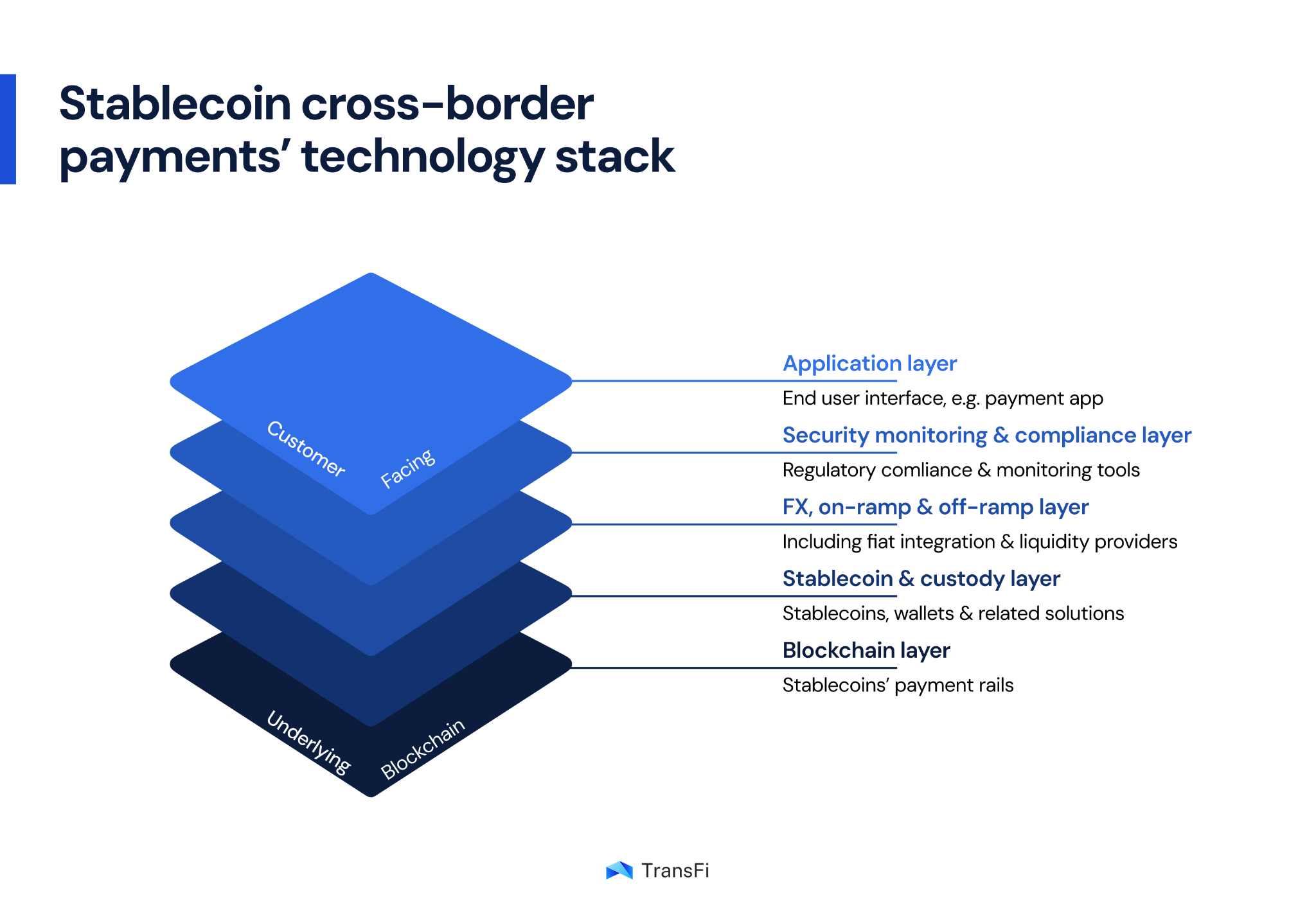
What kinds of challenges do stablecoins have?
The Risk and Liquidity of Reserves
Reserve assets are the basis for stablecoins. If you have money saved,
- When something is illiquid, it means you can't receive your money back straight away.
- Uncertainty reduces trust
- Unpegging could be risky.
Case Insight:
The algorithms weren't working appropriately, hence the TerraUSD crash led the system to fail.
The most important thing is:
What do reserve structures do to the risk of stablecoins?
They have a direct effect on how sure consumers are that they can use their points and how stable the price is.
Laws and Rules can be Unfavourable
There are different rules in different places in the world:
- According to MiCA, the EU has rigorous rules around reserves.
- People in China can't utilise cryptocurrency.
- India's policies around taxes and compliance are continually changing.
This dispersion makes it tougher for businesses to deal with their foreign exchange risk.
Risks in Operations and Technology
The infrastructure that stablecoins need is:
- Issues with smart contracts
- There is a chance that wallets will be hacked.
- Transactions that can't be changed
The Best Way to Use Stablecoins to Control FX Risk
1. The plan for fast conversion
The easiest and best way to accomplish it.
- Get cash for your stablecoins right away.
- Takes away all FX risk
- Keeps cash flow stable
Best for: small and medium-sized enterprises and exporters
2. Businesses often use forward contracts to protect themselves from FX risk
Set the rates of exchange ahead of time.
- Good for cash flow that is clear to see coming
- Helps you make predictions and organise your budget
- Makes money more stable
3. A Group of Different Stablecoins
What can you do to protect yourself from the hazards that come with stablecoins?
- Get more than one coin that is stable.
- Spread out among numerous people who issue them
- Keep fiat barriers in place.
This makes it less likely that you will lose your train of thought.
4. The Hybrid Hedging Model is the one that most people utilise
- Change 50 to 70% right away.
- Use forwards to keep 20% to 30% safe.
- Set aside 10% for cash flow needs.
Protects you while still letting you remain flexible
5. Watching FX in real time
Be careful of:
- The central bank's rules and regulations
- Trends in inflation
- Cycles of strength in the USD
Companies in developing markets undertake conversions once a month.
Real-world Examples of Stablecoins Protecting Against Foreign Exchange Risk
Example 1: An Indian firm that delivers software as a service
- People from all across the world send USDC to
- Changes 70% right away
- For the last 30%, it uses forwards.
What happened:
Cut FX volatility by around 40% in quarterly earnings.
Example 2: Sending money to Africa
- It uses USDT to send money to people.
- Changes happen in your area through liquidity partners.
Effect:
The fees went down from about 8% to less than 1%.
Example 3: A website that sells things online and collects data
- Keeps stablecoins to pay for things
- When the value of the USD changes, it loses money on FX.
Lesson:
When you hold without hedging, you are more open to risk.
What FX Risk Management Software and Platforms Do
Today's treasury departments employ FX risk management software to do the following on their own:
- Watching FX in real time
- Triggers for automatic conversion
- Hedging
- Treasury Analytics
Why platforms like TransFi are important:
TransFi is not like other systems because it:
- Payment methods for stablecoins
- Changing money from other countries in real time
- Layers of compliance built in
- Putting together cash flow
This makes it easier to use tools for managing FX risk.
Problems with Scaling Stablecoin-Based FX Risk Management
- Breaking the rules
- There are no rules that apply to everyone.
- Not as adaptable as banking systems
- Putting all your money in one place has its risks.
Things like SWIFT GPI, which have been around for a while, are also growing better.
What Will Happen to FX Risk Management in the Future
The next thing to do to manage corporate FX risk is probably:
1. Stablecoins and CBDCs are combining
Stablecoins and central bank digital currencies might be able to work together.
2. Built-in ways to handle FX risk
There will be platforms like these:
- Payments
- Hedging
- Analysis for the treasury
3. Using AI to make FX decisions
Models that can make educated guesses:
- When to switch
- Ways to protect
4. Rules that are clear and easy to follow
Frameworks like MiCA will make things work the same way all across the world.
Conclusion
Stablecoins are changing how consumers pay for items when they travel across borders, but they don't remove the risk of losing money in foreign currency.
Finance teams need to use stablecoins in a way that is both safe from foreign exchange risk and works well.
By adopting:
- Quick change
- Hedging tools
- Several treasury practices
- Advanced software for managing FX risk
Companies can still keep their money stable and get paid faster.
Join TransFi to make it easier to settle stablecoins, get more conversions, and make the global treasury stronger: Sign up.
FAQs
1. How can you reduce the risks of stablecoins?
Some of these are instant conversion, hedging with futures, diversification, and mixed treasury models.
2. What kinds of challenges do stablecoins face?
Risk of reserves, risk of rules, risk of operations, and risk of settlements.
3. What can businesses do to lower the risks that come with stablecoins?
By employing hedging instruments, moving their money in numerous areas, and using platforms for managing FX risk.
4. What makes settlement models riskier for stablecoins?
Delays in off-ramping and transactions that can't be undone can throw off timing and operations.
5. What does FX risk management software do?
It helps you keep track of your money better by automating treasury tracking, hedging, and conversion.
.png)












.avif)
.avif)



.avif)