










Indonesia has quickly revolutionised how consumers and businesses move money. Street food vendors and big businesses alike have made QR-based payments a part of everyday commerce. QRIS, Indonesia’s official QR payment standard, lies at the heart of this change.
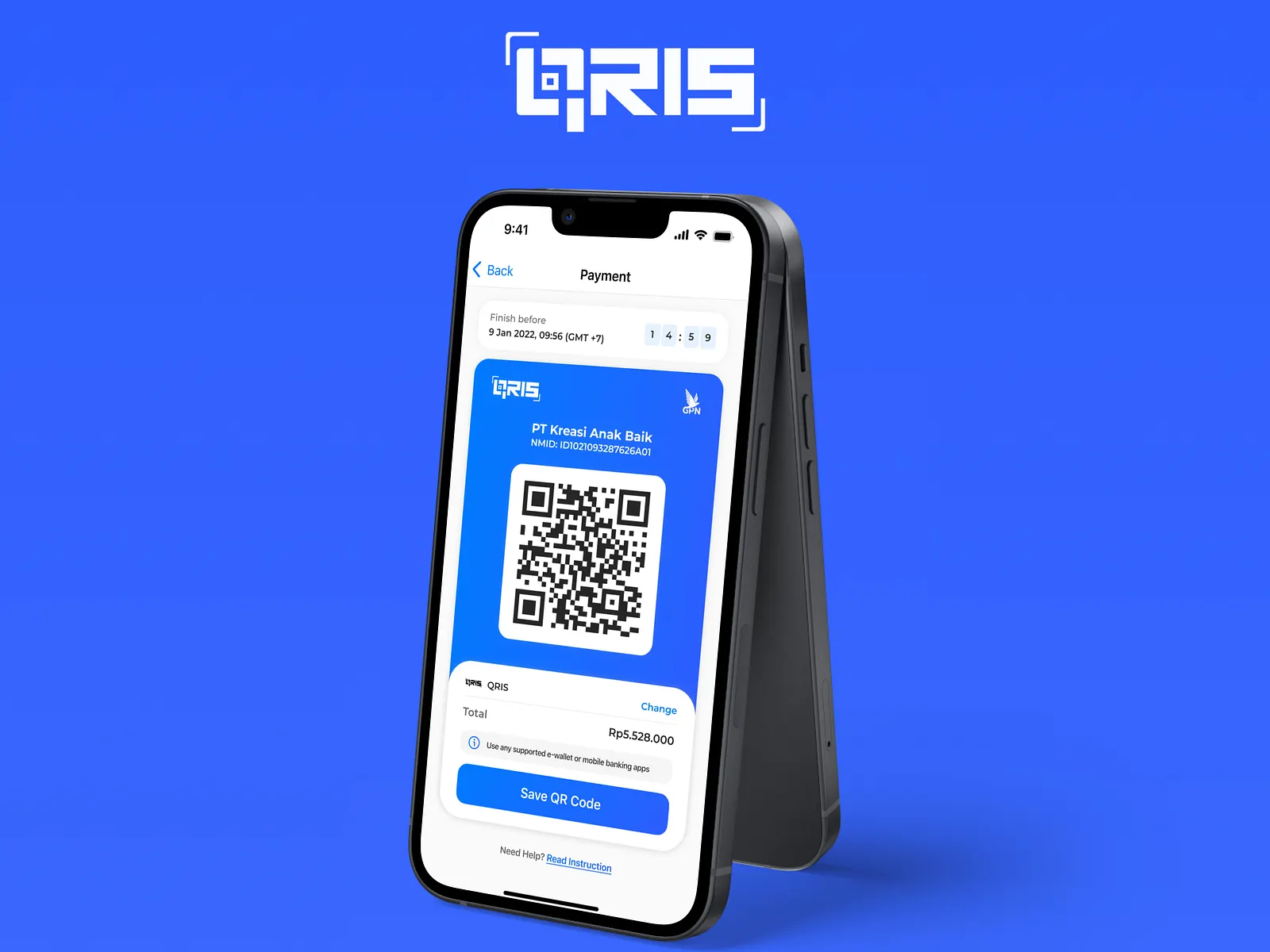
But what is QRIS and why is it so vital for enterprises operating in Indonesia? QRIS, or Quick Response Code Indonesian Standard, makes it easier for shops to take payment with only one QR code. Customers can scan it using partner bank and digital wallet apps.
International enterprises entering Indonesia should also be aware of QRIS. Offering payment methods that are popular in your local market may improve the checkout experience, reduce payment friction and aid with customer conversion. That’s where payment infrastructure companies like TransFi come in.
What Is QRIS and How Does It Work?
QRIS is Indonesia’s standardised QR payment system developed by Bank Indonesia and the Indonesian Payment System Association (ASPI). It sets a common technical standard for banks, digital wallets and payment service providers involved.
In Indonesian, the phrase “ QRIS adalah is often used to describe QRIS as a standard national QR payment system.
Before QRIS, merchants had to have separate QR codes for each payment app. QRIS eliminates this fragmentation by allowing businesses to show a single interoperable QR code.
Here’s how a typical QRIS transaction works:
- A merchant shows a registered QRIS code at checkout.
- The customer opens a participating digital payments app or bank.
- The customer scans the QR code and checks the transaction details.
- The customer confirms the payment through the application’s authentication process.
- The payment provider processes the transaction and sends a confirmation.
- The merchant receives the payment through its registered payment service provider.
For instance, a customer purchasing IDR 50,000 worth of food at a local restaurant can scan its QRIS code using a supported mobile banking app or digital wallet. The merchant does not need to have a different code for each application.
That interoperability is particularly useful to smaller merchants. It simplifies the complexity of accepting payments, without the need for a business to integrate with multiple payment providers separately.
How Businesses Accept QRIS Payments in Indonesia
Companies must register with a payment service provider (PJP) that is licensed by Bank Indonesia. The provider will be responsible for merchant onboarding, generating QRIS, and processing payments.
Registration normally occurs in the following order:
- Business registration: Apply with an authorised QRIS payment provider.
- Document submission: Business identification and additional documentation as necessary.
- Verification: Finish merchant verification and compliance checks for the provider.
- Merchant identification: Get a Merchant ID and QRIS code that has been registered.
- Activation: Enter the provider’s merchant application or dashboard.
Once activated, shops are able to display their QRIS code on physical counters, printed receipts, invoices or suitable digital checkout interfaces.
For example, a tiny shop in Jakarta can put a QRIS sticker next to the cash register. Customers can then scan it using appropriate payment apps, no extra payment terminals needed.
Businesses should also think about how they will reconcile payments, when money will hit their accounts, and what transaction charges will be incurred.
Static vs Dynamic QRIS: Which Should Businesses Choose?
QRIS supports different payment formats offered by merchants. The decision depends on transaction volume, checkout requirements and operational complexity.
1. Static QRIS
Static QRIS is a QR code that is fixed and contains the merchant’s identification details. The customer scans the code and enters the payment amount.
It is especially suited to small retailers, food stalls, market vendors and independent service providers.
Its greatest virtue is simplicity. Merchants can print and display the code without having to print a new QR for each transaction.
But entering amounts manually can lead to mistakes. Merchants should check that the payment amount is correct and that the payment has been confirmed before completing the sale.
2. Dynamic QRIS
The QRIS is dynamic, i.e. it is generated for each transaction. The amount to be paid is already in the system, so customers don’t have to key it in manually.
It is helpful for restaurants, supermarkets, online businesses and retailers with higher transaction volumes.
For example, a restaurant’s point-of-sale system can generate a QRIS code for a bill of IDR 185,000. The customer scans the code, confirms the amount and authorises payment.
Dynamic QRIS increases the accuracy of payment and facilitates transaction reconciliation.
The appropriate format depends on business requirements rather than transaction size alone.
QRIS Cross-Border: How International Payments Work
QRIS is no longer limited to transactions in Indonesia. Bank Indonesia has been expanding cross-border QR payment arrangements with participating countries.
These arrangements link compatible domestic payment systems and allow customers to make payments abroad without merchants having to install a separate QR infrastructure.
For example, an Indonesian tourist visiting Malaysia can use an eligible Indonesian payment application to scan a QR code of a participating merchant. The customer’s account is debited in Indonesian rupiah and the merchant is paid in Malaysian ringgit.
Similarly, visitors from participating countries can use compatible applications to purchase goods and services from QRIS merchants in Indonesia.
Cross-border partners include established partners Thailand, Singapore and Malaysia. Bank Indonesia also expanded cooperation with other markets like Japan.
Crucially, the participating payment arrangements automatically handle currency conversion. No need to exchange cash before you buy.
Bank Indonesia said the QRIS limit for cross-border transactions is similar to the domestic QRIS limit of IDR 10 million per transaction. Payment notifications are sent to both the Customers and the Merchants following a successful transaction.
For global businesses, these trends underscore a key opportunity: local payment preferences are becoming increasingly tied to regional commerce.
QRIS Adoption in Indonesia: Market Size and Growth
QRIS has become an important part of Indonesia’s digital payment infrastructure.
Bank Indonesia reported that the ecosystem experienced significant growth in 2026.
- 69.3 million users: QRIS users as of August 2026.
- 47.1 million merchants: Businesses accepting QRIS during the same period.
- 2.4 billion transactions: July 2026 monthly transaction volume.
- 67.22% growth: Year-on-year growth in transaction volume in August 2026.
Source: Bank Indonesia – October 2026 Economic Report.
The numbers are a measure of how much QRIS is being embraced. They also note the importance of accepting digital payments for businesses that want to reach Indonesian consumers.
One important detail is the participation of merchants. With QRIS, smaller businesses can join the formal digital payment ecosystem without the need to invest in complex payment infrastructure.
The implication is clear for international traders. To enter Indonesia you need more than presenting international cards. Businesses should also look at what local payment methods customers are already using.
What Is the QRIS MDR Fee for Merchants?
QRIS transactions are charged a Merchant Discount Rate (MDR). This is the processing fee that payment service providers charge merchants, and it is spread throughout the payment ecosystem.
Usually, the merchant bears the MDR. QRIS payment fees must not charge the customer an additional fee by the business.
Bank Indonesia has amended the existing MDR structure effective from 1 October 2026.
Some government-related and public service transactions also qualify for 0% MDR.
Source: Bank Indonesia – QRIS MDR Guidelines, October 2026.
Let’s take a small business that is classified as a regular micro-enterprise. For QRIS transactions of IDR 750,000, the MDR is 0.3%.
Therefore, the processing fee is IDR 2,250.
Understanding these fees is important when calculating payment acceptance costs, especially for businesses that process thousands of transactions each month.
How TransFi Helps Businesses Accept Payments in Indonesia
Accepting local payment methods is an important part of entering a new market. But firms that are active in several countries often face an additional challenge: connecting several payment networks, handling currency conversions and managing cross-border settlements.
TransFi removes this complication with a single worldwide payments infrastructure.
Its Indonesia payment coverage includes local payment methods such as GoPay, OVO, DANA, QRIS and Indonesian bank transfers in a single integration.
With TransFi’s architecture, businesses may access the supported local payment choices without having to design and manage separate integrations for each payment method.
This is particularly the case for multinational merchants, digital platforms and businesses that offer customers in more than one market.
There are three skills worth noting:
1. Local payment acceptance through one integration
TransFi provides one integration for Indonesian payment methods. Its QRIS checkout guide details how clients can check an amount to pay in IDR, scan a generated QR code with supported apps and complete the transaction.
2. Cross-border payment infrastructure
If you have clients, vendors or contractors outside your country, you need more than just accepting domestic payments. TransFi combines local payment rails, cross-border payment infrastructure, and stablecoin-enabled settlement capabilities.
3. Transparent FX and payment visibility
International payments include currency conversion, processing costs and settlement complications. TransFi provides insight into upfront FX and fees, transaction tracking and payment progress updates on supported routes.
For instance, a global platform that pays Indonesian contractors can utilise local payout mechanisms, such as supported bank transfers and e-wallets. TransFi also allows for cross-border payments for firms making cross-border payments.
That could simplify the engineering and operational load of linking disparate payment systems for enterprises seeking to grow into Indonesia.
Explore payment gateway coverage in Indonesia to understand the available local payment methods.
Businesses managing business payments to Indonesia can also explore TransFi's cross-border payment infrastructure.
Accept local payments? Make international payments simple? To learn more about TransFi’s payment infrastructure or to communicate with the team about your company needs.
Conclusion
By consolidating multiple payment apps into one standardised QR system, QRIS has simplified the acceptance of digital payments for businesses in Indonesia.
It provides an easy way for merchants to accept digital payments. For customers, it delivers a unified checkout experience across participating apps. The growing cross-border capabilities also enhance Indonesia’s ties with regional payment networks.
But for businesses entering Indonesia, it's more than just QR code generation. Merchant onboarding, MDR, payment reconciliation, settlement and international payment connectivity all impact the overall experience.
Wider requirements are being solved by platforms like TransFi, which link businesses to local payment methods and cross-border payment infrastructure through a single integration.
As digital commerce grows, QRIS will continue to be an important part of Indonesia’s evolving payments ecosystem.
FAQs:
1. What is QRIS in Indonesia?
QRIS stands for the Indonesian Quick Response Code Standard. It is the national QR payment standard in Indonesia, enabling customers to pay shops using participating bank and digital wallet apps.
2. How do businesses register for QRIS?
Businesses are required to register through a payment service provider authorised by Bank Indonesia. They provide the required business documents, pass verification and get a Merchant ID and QRIS code.
3. What is the difference between static and dynamic QRIS?
Static QRIS is a permanent code that clients have to key in manually. Dynamic QRIS creates a transaction-specific code that includes the payment amount.
4. What is the QRIS transaction limit?
The domestic limit for QRIS is 10 million rupiah per transaction. Payment service providers may also impose further aggregate limits as part of their risk management approach.
5. What is the QRIS MDR fee for merchants?
MDR is derived from merchant classification and transaction value. Under the new structure, regular micro merchants will pay 0% on IDR 500,000 and 0.3% on top of that, in October 2026.
6. Can QRIS be used for cross-border payments?
Yes. QRIS allows cross-border payments via participating international payment arrangements. Indonesia has established links with markets such as Thailand, Malaysia and Singapore.
7. How long does QRIS settlement take?
Settlement is subject to payment service provider agreements, merchant arrangements and transaction processing. Businesses should verify with their provider to check which settlement schedule applies to them.
8. Is QRIS regulated by Bank Indonesia?
Yes. QRIS is regulated by Bank Indonesia as part of Indonesia’s national payment system, and it is subject to the technical standards, merchant pricing policies and operational requirements set by Bank Indonesia.
9. Can international businesses accept QRIS payments?
To accept QRIS, international firms may consider partnering with supported payment service providers and payment infrastructure platforms. Availability is subject to merchant eligibility, onboarding procedures, and markets covered by the provider.
10. Can businesses accept QRIS through TransFi?
TransFi’s payments infrastructure allows access to QRIS and other Indonesian payment methods. Businesses can speak to the TransFi team to check availability and onboarding and integration requirements, and QRIS checkout documentation.