










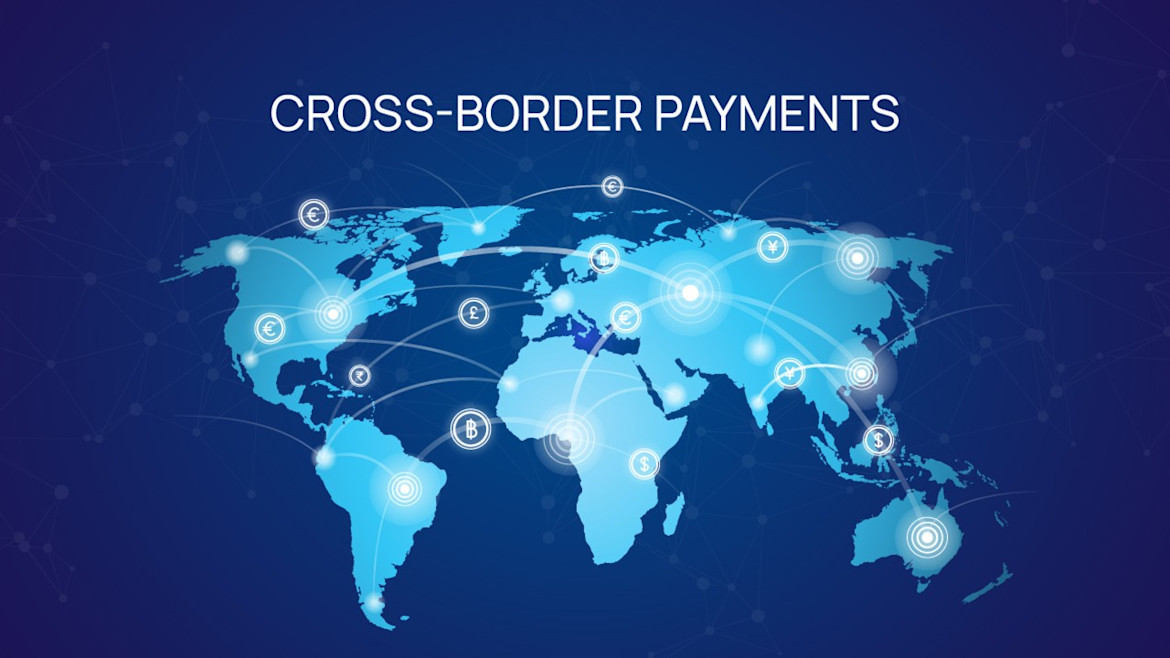
Cross-border payments have been expensive, sluggish and dependent on correspondent financial networks. Today, Southeast Asia is creating a new chapter with the rapid use of mobile wallets and interoperable QR payments. Governments, regulators, fintechs and payment providers are constructing digital payment infrastructure that enables consumers and companies to transact in their preferred wallets and local currencies quickly.
The move is especially noticeable in Southeast Asia, where governments are connecting their domestic payment systems to help boost international trade, tourism, remittances and company settlements. Digital wallets are becoming more common as a payment method, and cross-border transactions are getting faster, more transparent and much cheaper.
The mobile wallet is transforming the movement of money across borders, whether it’s a tourist scanning a QR code in another country or a corporation making invoice payments without the need for numerous institutions in the middle.
Why Southeast Asia Is Leading Cross-Border Payment Innovation
Southeast Asia has one of the world's fastest-growing digital economies. Rising smartphone penetration, increasing internet access, and supportive government initiatives have accelerated digital payment adoption across the region.
Countries such as Indonesia, Thailand, Malaysia, Singapore, Vietnam, and the Philippines have introduced national QR payment systems that allow consumers to pay using familiar mobile applications while merchants receive funds in their local currency.
This model delivers several benefits:
- Lower transaction costs
- Real-time payment settlements
- Better exchange rate transparency
- Reduced dependence on cash
- Improved financial inclusion
The result is a payment ecosystem that supports consumers, businesses, and governments simultaneously.
"The future of payments lies in interoperability rather than isolated payment networks." This principle is increasingly reflected in regional payment initiatives across ASEAN.
How Does Cross-Border Money Transfer Work?
Traditional international payments usually involve multiple correspondent banks before funds reach the beneficiary. Every intermediary increases processing time and transaction costs.
Modern mobile wallet infrastructure simplifies this journey.
Instead of routing transactions through several banking institutions, interoperable payment systems connect domestic payment rails directly. Consumers simply scan a QR code using their local wallet, while payment providers handle currency conversion and settlement behind the scenes.
The process generally follows these steps:
- The customer scans a merchant QR code.
- Wallet verifies payment details.
- Currency conversion occurs automatically.
- Local payment networks communicate instantly.
- The merchant receives settlement in local currency.
This significantly improves customer experience while reducing operational costs for businesses.
National QR Systems Powering Mobile Wallet Adoption
Several government-backed payment systems have become the backbone of regional interoperability.
These systems are increasingly connected through bilateral and multilateral agreements, allowing users to make international payments without downloading additional applications.
For example:
- Malaysian tourists can pay Thai merchants using DuitNow.
- Indonesian travellers can use QRIS overseas.
- Singapore users can transfer funds to neighbouring countries through linked payment systems.
Can I Send Money Internationally with M-PESA?
Although M-PESA international money transfer primarily operates in Africa, it demonstrates how mobile money platforms can simplify international remittances.
What is M-PESA and how does it work?
M-PESA mobile money allows users to store value digitally, transfer funds, pay merchants, purchase airtime, and access financial services directly from their mobile phones.
Today, M-PESA countries include Kenya, Tanzania, Mozambique, Lesotho, Ghana, Egypt and several other African markets.
Users typically:
- Register using a mobile number
- Deposit cash through authorised agents
- Transfer funds digitally
- Withdraw cash whenever required
International transfers are available through partner networks in selected markets.
Although M-PESA Africa focuses on African corridors, Southeast Asia is following a similar mobile-first approach through QR interoperability instead of agent-based networks.
Financial Inclusion Through Mobile Wallets
One of the biggest advantages of digital wallets is accessibility.
Millions of people across Southeast Asia remain underbanked. However, smartphone ownership is considerably higher than traditional bank account penetration.
Mobile wallets enable users to:
- Receive salaries
- Send remittances
- Pay merchants
- Purchase insurance
- Save digitally
- Invest through fintech applications
For migrant workers, international remittances become significantly cheaper than conventional wire transfers.
Similarly, small businesses can accept digital payments without investing in expensive payment terminals.
This democratisation of financial services continues to reduce barriers to economic participation.
How Businesses Benefit from Cross-Border Mobile Wallet Payments
Cross-border commerce depends heavily on efficient payment infrastructure.
Modern payment networks provide businesses with:
- Faster settlements
- Lower FX costs
- Reduced payment failures
- Better cash flow visibility
- Improved reconciliation
- Increased international customer acceptance
Small and medium-sized enterprises (SMEs) particularly benefit because they can expand internationally without maintaining multiple foreign bank accounts.
Digital payment interoperability also reduces payment delays, improving working capital management.
Why TransFi Is Built for Modern Global Payments
As cross-border payment ecosystems become more interconnected, businesses need infrastructure that supports global collections, payouts, wallet payments, bank transfers, and local payment methods through a single integration.
TransFi addresses this challenge by providing businesses with a single API for global payment acceptance and cross-border disbursements. Instead of integrating multiple regional payment providers, enterprises can access local payment methods, bank transfers, digital wallets, and alternative payment rails through one platform.
Key capabilities include:
- Global collections
- Cross-border payouts
- Local payment methods
- Wallet-based payments
- Stablecoin settlement support
- Enterprise-grade compliance
- Multi-currency payment infrastructure
For businesses expanding across Southeast Asia, this reduces operational complexity while improving payment success rates and settlement efficiency.
Looking to simplify international collections and payouts?
Explore how TransFi enables scalable cross-border payment infrastructure through a single API.
Challenges That Still Need Attention
Despite remarkable progress, several challenges remain.
Regulatory fragmentation
Every country follows different compliance requirements, transaction limits, and licensing frameworks.
Cybersecurity risks
As payment volumes increase, fraud prevention becomes increasingly important.
Digital literacy
Many rural populations still require education regarding secure digital payment usage.
Technical interoperability
Standards such as ISO 20022 continue to play an essential role in ensuring seamless communication between payment systems.
Addressing these challenges will require ongoing collaboration between regulators, central banks, financial institutions, and fintech companies.
The Future of Cross-Border Payments in Southeast Asia
The next phase of payment innovation extends beyond ASEAN.
Regional payment connectivity initiatives are expanding towards China, Japan, South Korea, and India, creating broader Asian payment corridors.
Emerging technologies such as:
- Stablecoin-based settlements
- Artificial Intelligence for fraud detection
- Embedded finance
- Programmable payments
- Central Bank Digital Currencies (CBDCs)
Will further improve payment speed, transparency, and operational efficiency.
Projects such as Project Nexus also demonstrate how interoperable payment infrastructure can connect multiple domestic instant payment systems under one framework.
Businesses that adopt these technologies early will be better positioned to participate in the region's expanding digital economy.
Whether you're building a fintech platform, marketplace, or enterprise payment solution, choosing scalable payment infrastructure today prepares your business for tomorrow's global commerce.
Conclusion
Mobile wallets have become significantly more than consumer payment apps. Today, they are the backbone of cross-border trade in Southeast Asia.
The infrastructure for QR payment systems, interoperable payment networks and real-time settlement methods is making payments cheaper and easier for consumers, tourists, migrant workers and enterprises.
Regulatory compliance and cybersecurity are still high priorities, but the area has proved that the collaboration between governments and fintech innovators can modernise international payments at scale.
This shift is being facilitated by platforms like TransFi, which provide businesses with a single unified payment infrastructure to seamlessly collect globally, pay cross-border, and accept local payments via a single integration.
With increasing regional connectivity and the rapid adoption of digital payments, Southeast Asia can become one of the world’s most advanced cross-border payment ecosystems.
FAQs:
1. What is M-PESA and how does it function?
M-PESA is a mobile money transfer technology that enables users to keep money in a digital wallet and transmit money, pay merchants and access financial services using their mobile phones.
2. Can I use M-PESA to send money to other countries?
Yes. M-PESA international money transfer is available to certain countries through licensed banking and payment partners.
3. Which countries in Africa use M-PESA?
M-PESA is in Kenya, Tanzania, Mozambique, Lesotho, Ghana, Egypt, Ethiopia and other African markets.
4. How does the process of money transfer abroad work?
Modern cross-border payments are conducted on interoperable payment networks that connect domestic payment systems and enable real-time transfers, automatic currency conversion, and local settlement.
5. What is driving the rapid growth of mobile wallets in Southeast Asia?
The region has seen higher wallet adoption, led by more people owning smartphones, government-backed QR payment systems, better financial inclusion and lower transaction costs.





.avif)
.avif)



.avif)