







Digital assets have expanded so swiftly that they have transformed how money functions around the world. But this transformation makes people more likely to be victims of financial crime, more likely to be scrutinised by regulators, and harder to follow the rules.
The Crypto AML (Anti-Money Laundering) and KYB (Know Your Business) frameworks are the two most important things that are evolving. They are the two most important things that make sure crypto payments are safe, transparent, and legal.
This article presents a complete and well-organised overview of crypto AML KYB for payments, including the rules and regulations, how things function in the real world, and what the future holds.
What You Need to Know About Crypto AML KYB for Payments
Crypto AML is a set of regulations, controls, and monitoring systems that keep things like fraud, money laundering, and funding terrorism from happening in blockchain ecosystems.
It is more difficult to regulate AML in crypto than in traditional finance since it has pseudonymity, cross-border transfers, and decentralised systems.
Important features of AML in crypto:
- Use a risk-based strategy to find high-risk users and locales.
- Systems that look for unusual patterns in transactions
- Checks for sanctions and blacklists
- Keeping documents for audits and making sure everything is up to code
- Suspicious Activity Reporting (SARs)
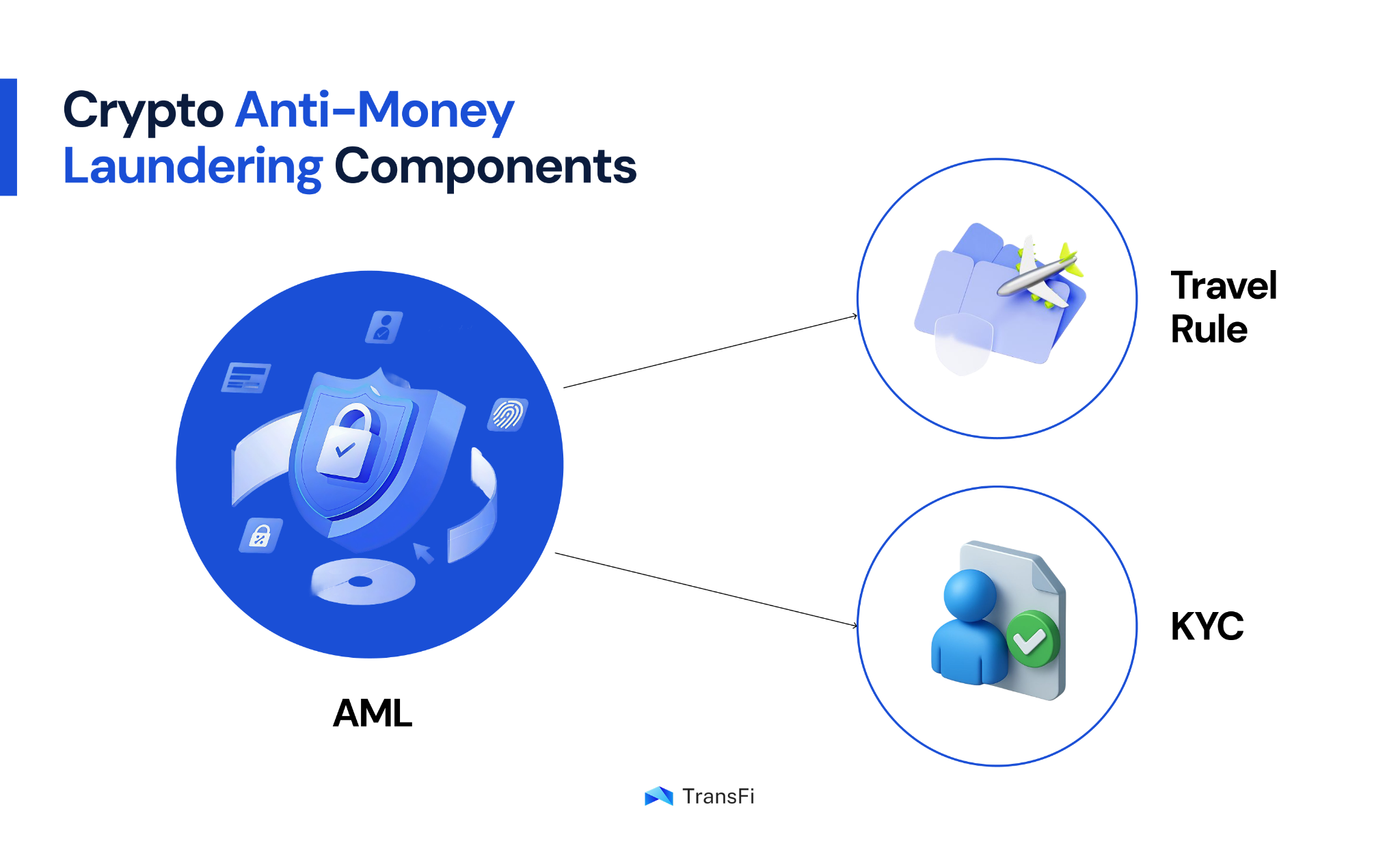
What does AML stand for in KYB? Learn what KYB means in Cryptocurrency
"Know Your Business" (KYB) is a means to find out if a firm is real, who owns it, and what hazards it poses.
KYB is a very significant step in starting to use crypto payments:
- Exchanges
- Processors of payments
- Businesses that are new to crypto
- Customers from institutions
In the world of cryptocurrencies, what does KYB mean?
KYB checks if businesses that use crypto platforms are authentic and obey the rules. This makes it less likely that you'll work with fake businesses or criminal networks.
How does KYB work? A Step-by-Step Guide
The KYB method is based on a system and how much risk there is.
1. Getting information about companies:
- Name of the business, registration number, and address
- Details about how the firm operates and how it is run
2. Checking Documents:
- Certificates of incorporation
- Licenses and approvals from the government
3. Mapping of Ownership (UBOs):
- Find the Ultimate Beneficial Owners
- To find out who owns something, look at a lot of different entities.
4. Checking for risks:
- Sanctions lists
- Politically Exposed Persons (PEPs)
- Checks for adverse information
5. Risks of Scoring:
- Depending on location, industry, and activity
- Extra care is used with high-risk enterprises.
6. Keeping monitoring on things:
- Ownership and risk modify all the time.
Things to Think About:
KYB isn't something you do just once; it's something that happens all the time.
What is KYC and AML in cryptocurrency? How They Work Together
AML requirements apply to both KYC (Know Your Customer) and KYB.
They all work together to make a complete system for following the rules.
During the KYB process, AML keeps track of all confirmed firms all the time to see if anything strange is going on.
Important AML Rules for Companies That Deal in Cryptocurrency
1. Assessing Risk:
- Check for problems with transactions, places, and things.
2. Keeping a track of transactions:
- Look for odd transfers
- Mark encounters wallets that are very dangerous
3. Reporting Strange Behaviour:
- You need to tell the financial intelligence units.
4. Programs for compliance:
- Internal controls
- Frameworks for governance
5. Teaching Workers:
- Teams need to know what warning signs are and how to obey the guidelines.
How to Use Cryptocurrencies to Launder Money
Crimes in the crypto world are changing all the time.
The Most Common Ways:
- Some tools that can hide objects are mixers and tumblers.
- Coins like Monero that protect your privacy
- Exchanges that are not centralised (DEXs)
- Deals that happen on more than one chain
- Crypto ATMs that don't follow the laws very well and
- Use NFTs to launder money
Stat Insight:
In the U.S., losses from crypto frauds rose by 53% from the year prior to $3.94 billion.
Examples from real life of AML failures
1. The Binance Case:
- Paid a fine of $4.3 billion
- AML controls that didn't work
- Allowed transactions with people on the list of people they can't do business with
2. Paying for ransomware:
- Cryptocurrency is still the main way that ransomware groups are paid because it's hard to track.
3. Laundering NFTs:
- People send fake money through false NFT trades to make it look like it has value.
Quote: "Compliance is no longer optional in crypto; it's part of the infrastructure."
Combining AML and KYB in crypto payments
The Financial Action Task Force (FATF) has a rule called the Travel Rule that says:
- Giving public information on the individual who sent and received
- Required compliance at certain levels
Adoption Insight:
- Laws in 73% of places declare that they have to obey the Travel Rule.
A rule in action:
- The EU's MiCA rule stipulates that the requirements for AML and KYB need to be tougher.
- In the EU, there are no limits on how much cryptocurrency you can transmit.
The Advantages of following KYB and AML rules
1. Stopping fraud:
Finds nasty folks right away
2. Following the regulations:
Don't get in trouble and don't get a ticket.
3. Trust and Credibility:
Makes users and partners more reliable
4. Growth that can be scaled:
Allows the world to grow safely
5. Prepared for an audit:
Keeps track of things in order
Using Technology to Check KYB and AML
In today's society, automation is vital for compliance.
What can advanced tools do?
- Getting a grade for how risky a wallet is
- Looking at how people act
- Following across chains
- Alerts in real time
- Automatically checking KYB
Information: AI-powered technologies can make the process of training new workers up to 70% faster.
Smarter Compliance with TransFi
Businesses that are growing their crypto payments should not spend time doing AML and KYB manually.
TransFi offers a single infrastructure that helps:
- Make the KYB onboarding procedure automatic
- Allow transactions to be watched in real time
- Follow all the rules for AML in every country.
- Make it easier to transact business with both crypto and fiat money across borders.
TransFi's onboarding and compliance solutions can make things go more smoothly if you're constructing a payment stack that follows all the laws.
Visit Now: Book a demo with TransFi to see how automated AML and KYB workflows can simplify compliance across jurisdictions. Sign up.
Issues with Crypto AML KYB for Payments
Different rules in various nations:
- Coins to keep your identity secret and tools to stay anonymous
- Fast transaction speeds
- Difficult ways to own things
How to Fix:
- Invest in tools for blockchain analysis
- Make sure there are systems in place for ongoing monitoring.
- Use compliance platforms that use AI.
What kinds of enterprises have to follow the requirements for KYB and AML?
- Exchanges and wallets for crypto
- Fintech and payment systems
- Banking institutions
- Stores that sell NFTs
- DeFi Platforms
Important:
Companies that deal with cash or digital assets must follow the requirements for AML and KYB.
What AML and KYB Will Look Like in the Future
The next step in compliance will be to pay attention to:
1. Following the regulations immediately:
- Right away, risk scores for each transaction
2. Getting the rules for everyone to follow:
- More standardised frameworks, like MiCA
3. Compliance powered by AI
- Ways to discover dangers before they happen
4. New ways to identify:
- Systems for decentralised identity (DID)
5. More companies are using it
- Banks are coming into crypto, but they have to obey a lot of rules.
Insight:
Following the rules will no longer cost you money; it will help you get ahead of the competition.
Conclusion
Crypto AML and KYB for payments are particularly critical for the health of the digital asset ecosystem. Businesses need to employ proactive, technology-based strategies to stay compliant as standards get harder and dangers change.
Businesses may minimise risk, create trust, and open up scalable global expansion by merging AML and KYB processes. Platforms that consider compliance as more than simply a tick to check will do well in the future.
FAQs:
1. What does AML mean in the world of crypto?
In crypto, anti-money laundering (AML) entails doing things to stop unlawful actions like using digital assets to launder money.
2. What does KYB mean when AML says it?
KYB checks to make sure businesses are real and owned by the correct people to stop people from stealing money.
3. In the context of crypto, what do AML and KYC mean?
KYC checks the identity of each user, and AML keeps an eye on transactions and searches for suspicious conduct.
4. Which types of businesses must observe KYB and AML rules?
These firms, such as crypto platforms, fintech companies, banks, and payment processors, must all follow the laws.
5. How does technology make AML and KYB checks better?
With AI and blockchain analytics, you can keep a watch on things in real time, speed up the onboarding process, and detect dangers more readily.
.png)











.avif)
.avif)



.avif)