








For millions of Filipinos, GCash has become more than a digital wallet. It is now an important bridge between local payments and the global economy. If you want to receive money from abroad using GCash, you can use international remittance partners, banks, and digital payment services.
The platform supports a broad network of GCash international remittance partners. These include Remitly, Western Union, MoneyGram, Taptap Send, Ria, Skrill, TransferGo, WorldRemit, Visa Direct, and others. The exact options depend on the sender's country.
For OFWs, freelancers, families, and businesses, the key questions are different. Which provider is cheapest? How much can you receive? How quickly will the money arrive? And when does using a business payment infrastructure make more sense?
This guide answers those questions without treating every international transfer as the same.
How do I receive money from abroad using GCash?
To receive money on GCash from abroad, first make sure your account is Fully Verified. The sender then chooses a supported GCash remittance partner, enters your registered name and mobile number, and selects GCash as the delivery method. Depending on the partner, funds may arrive automatically or require a manual claim in the GCash app.
The basic process is:
- Fully verify your GCash account.
- Give the sender your exact registered name and GCash mobile number.
- Ask the sender to use an official GCash partner.
- The sender selects GCash as the receiving wallet.
- Track the transfer using the provider's reference number.
- Claim the remittance in GCash if required.
GCash specifically recommends using only official remittance partners.
GCash international remittance partners
The list of GCash international transfer partners is extensive and varies by country. For example, the US supports providers such as MoneyGram, Remitly, Ria, Taptap Send, Western Union, Xoom, Visa Direct, and others. The UK includes Remitly, Taptap Send, TransferGo, WorldRemit, Western Union, Ria Money, and more.
Some of the most recognisable options include:
- Western Union: useful for senders who prefer a large traditional remittance network.
- MoneyGram: supports multiple international corridors and delivery options.
- Remitly: digital-first transfers with GCash support across several markets.
- Taptap Send: particularly relevant for several OFW corridors.
- Ria Money Transfer: available across numerous countries.
- WorldRemit: another established digital remittance option.
- Skrill and TransferGo: available in selected markets.
- Visa Direct: supported in specific corridors.
The important point is that a provider being available in one country does not mean it is available everywhere. Always check the official GCash partner list for the sender's location.
GCash for OFW remittance
For an OFW sending money home, the best route depends on three variables: total cost, delivery speed, and convenience.
A provider advertising a zero transfer fee is not automatically the cheapest. The exchange rate can contain a margin that reduces the final PHP amount received.
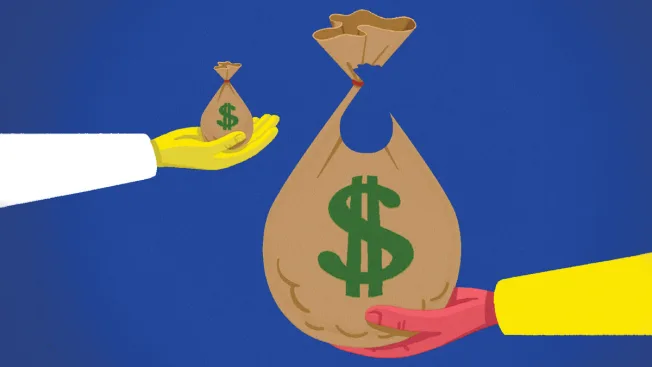
For example, imagine two providers:
Provider B costs more visibly but delivers more money. This is why the right comparison is always total PHP received, not just the advertised fee.
For broader options, users can also explore services designed to Receive Money in the Philippines or Send Money to the Philippines through alternative cross-border payment infrastructure.
GCash remittance fees and exchange rate explained
One of the biggest advantages of receiving an international remittance through GCash is that sending and claiming remittances is currently free on GCash's side. However, the sender's remittance provider may charge a transfer fee or build a margin into its FX rate.
This distinction matters.
A transfer can have:
- Transfer fee: the explicit amount charged for sending.
- FX margin: the difference between the provider's exchange rate and the underlying market rate.
- GCash receiving fee: currently free for remittance transactions.
The PHP 8,000 monthly free cash-in threshold is often misunderstood. It applies to over-the-counter cash-ins, where a 2% fee applies to amounts above the monthly free threshold. GCash separately states that remittance sending and claiming are free.
Therefore, users should not automatically apply the 2% OTC cash-in fee to international remittances.
What is the cheapest way to send money to GCash from abroad?
The cheapest option depends on the sender's country, transfer amount, payment method, and FX rate. Compare the final PHP amount received rather than the transfer fee alone.
For example, a $1,000 transfer with a $0 fee but a weak FX rate can be more expensive than a $1,000 transfer with a small upfront fee and a better rate.
GCash receiving limits
Your GCash receiving limits depend on your account profile. A Basic account has a PHP 5,000 monthly incoming transaction limit and a PHP 10,000 wallet limit. A Fully Verified account has a PHP 100,000 monthly incoming limit and a PHP 100,000 wallet limit. GCash Plus can reach PHP 500,000, subject to eligibility.
These figures are important for anyone receiving regular GCash for OFW remittance.
A recipient expecting PHP 90,000 should also consider their existing balance. A PHP 90,000 transfer cannot simply be added if the resulting wallet balance exceeds the applicable wallet limit.
GCash says limits reset on the first day of the next month, or users may become eligible for a higher profile limit.
Do I need a verified GCash account to receive international transfers?
Yes. International remittance claims require a Fully Verified GCash account. Verification involves submitting an accepted ID and selfie through the GCash app.
This is particularly important for larger transfers. A Basic account has a PHP 5,000 monthly incoming limit, which can quickly become restrictive.
You can check your current limits inside the app under Profile → Profile Limits.
How to receive money on GCash from overseas step by step
The exact process depends on whether the transfer is direct-to-wallet or requires a manual claim.
Direct-to-GCash remittance
With a direct-to-wallet transfer, the sender selects GCash from the remittance provider's app or website. They provide your registered details and complete the payment.
If the transaction is supported, the money is credited directly to your GCash wallet.
Manual remittance claim
For supported remittance partners:
- Open GCash.
- Tap Cash In.
- Select Global Banks and Partners.
- Choose the relevant remittance partner.
- Enter the expected amount.
- Enter the reference number.
- Enter the transaction purpose.
- Review the information.
- Enter the six-digit code sent to your number.
If the information matches, GCash says the funds can appear in the wallet instantly.
The recipient's name must exactly match the GCash account details. GCash also advises claiming remittances within 90 days. Three incorrect reference-number attempts can trigger a 24-hour waiting period.
How long does a GCash international transfer take?
Many wallet-based remittances can arrive within minutes. However, timing depends on the remittance provider, payment method, corridor, compliance checks, and settlement process.
A delayed transfer does not necessarily mean the money is lost.
If a remittance does not appear, check the reference number and recipient mobile number first. GCash says failed remittances are refunded to the sender within two business days in the relevant cases.
Can businesses receive international payments through GCash?
Yes, but business requirements differ from personal remittances.
GCash also offers business payment capabilities, while its consumer ecosystem supports features such as Request Payment. Fully Verified users can request payments from international clients, including USD payments through an activated Virtual US Account.
For a freelancer receiving occasional client payments, this can be useful. But businesses collecting payments at scale may need more than a consumer wallet.
They may need:
- Multiple payment methods
- Automated reconciliation
- Multi-currency collections
- Local payment rails
- FX management
- API integration
- Compliance controls
- Payout infrastructure
This is where a cross-border payment platform becomes more relevant.
How TransFi can simplify international collections
For businesses accepting payments from Filipino customers or paying recipients in the Philippines, the challenge is usually not GCash itself. It is connecting multiple local payment methods without building separate integrations for every market.
TransFi supports GCash as a local wallet payment method for merchants. Its infrastructure is designed to let businesses accept local payment methods while maintaining a more unified global payments stack.
Its single API provides access to global collections, payouts, cards, and stablecoin rails through one integration. TransFi says its infrastructure supports 70+ countries, while its broader platform offers access to 250+ payment methods.
For SMEs, BizPay focuses on cross-border collections and payments. It supports payment activity through WhatsApp or Telegram and is positioned for businesses operating across 100+ countries and 40+ currencies.
For larger organisations, BizPay Pro combines global collections, payouts, treasury, FX, and digital-asset settlement. It also supports local wallets, bank rails, stablecoins, and multi-currency workflows through a unified infrastructure.
This makes TransFi particularly relevant when GCash is only one part of a broader payment flow.
For example, an international marketplace serving Filipino customers could Accept GCash alongside cards, bank transfers, and stablecoins without maintaining a separate integration for every rail.
Businesses looking specifically to Accept GCash can use TransFi's payment infrastructure to integrate the wallet into their global payment flow.
For businesses that need broader collections and treasury capabilities, BizPay and BizPay Pro provide different levels of infrastructure.
If your business receives cross-border payments, evaluate the complete payment flow rather than adding another standalone wallet integration. A unified infrastructure can reduce payment fragmentation as you expand into new markets.
What details do I give the sender?
Usually, provide:
- Your exact GCash-registered full name.
- Your registered GCash mobile number.
- Any additional information required by the remittance provider.
Do not share your MPIN, password, or OTP with the sender or anyone claiming to process your remittance.
Incorrect recipient details can cause delays or failed transactions. GCash specifically instructs users to ensure the recipient name and number match the GCash account.
Future outlook for GCash international payments
The next phase of Philippine remittances is likely to be less about individual wallets and more about interconnected payment infrastructure.
GCash already supports international remittance partners across a wide range of markets. Its GCash Overseas offering also supports international bank cash-ins, PayPal, Payoneer, international remittance partners, and transfers to Philippine users.
For businesses, the direction is even clearer. Local wallets such as GCash increasingly need to coexist with cards, bank transfers, instant-payment networks, and stablecoins.
This creates an opportunity for infrastructure providers such as TransFi. Instead of integrating every payment rail independently, businesses can use a unified API and routing layer.
For a deeper explanation of the ecosystem, see What is GCash International Payments? How Filipinos Receive and Send Money Globally.
Conclusion
GCash has made receiving international money significantly simpler for Filipinos. The platform connects recipients to a large network of remittance providers, while direct wallet credit can remove the need for traditional cash collection.
But convenience does not eliminate the need to compare costs. The most important variables remain the exchange rate, provider fee, delivery speed, account limits, and verification status.
For individuals, the practical approach is simple: use an official partner, maintain a Fully Verified account, check your limits, and compare the final PHP amount received.
For businesses, the problem is broader. Accepting GCash may be useful, but scaling international payments requires payment orchestration, local rails, FX, compliance, reconciliation, and reliable settlement.
That is where unified infrastructure such as TransFi can become more valuable than adding another standalone payment integration.
For another practical comparison, read Sending Money to the Philippines Using GCash: Fees, Speed, and Best Transfer Options.
FAQs:
1. Which remittance partners send money to GCash?
GCash supports numerous official partners, including Remitly, Western Union, MoneyGram, Ria, Taptap Send, WorldRemit, Skrill, TransferGo, Visa Direct, Xoom, and others. Availability depends on the sender's country and corridor, so users should check GCash's current official partner list before sending.
2. What are GCash's receiving limits?
A Basic account currently has a PHP 5,000 monthly incoming limit. A Fully Verified account has a PHP 100,000 monthly incoming limit. GCash Plus can reach PHP 500,000, subject to eligibility. Your wallet balance must also remain within the applicable wallet limit.
3. What fees apply to receiving money on GCash?
GCash currently states that sending and claiming remittances is free. However, the sender's provider may charge a transfer fee or apply an FX margin. The 2% fee above PHP 8,000 applies to over-the-counter cash-ins, not standard remittance claims.
4. How long does an international transfer to GCash take?
Many direct-to-wallet transfers can arrive within minutes. Manual remittance claims can also be credited instantly after successful verification. However, actual timing depends on the remittance provider, payment corridor, compliance checks, and settlement method.
5. Can I receive USD to GCash?
Yes, eligible users can use GCash's Request Payment functionality for international client payments. GCash says users with an activated Virtual US Account can receive USD payments, subject to applicable wallet and transaction limits.
6. How do freelancers receive client payments on GCash?
Freelancers can use supported international remittance routes or GCash Request Payment. For USD payments, an eligible user can activate a Virtual US Account. Businesses with larger or more complex international collections may benefit from dedicated infrastructure such as TransFi BizPay.
7. Is GCash suitable for business payments?
GCash can support business payments, but requirements and limits differ from personal wallets. GCash for Business has separate merchant tiers, including higher transaction limits. Businesses handling multiple currencies, payment methods, or large cross-border volumes may require a broader payment infrastructure.
8. What should I do if my GCash remittance does not arrive?
First, check the recipient's mobile number, reference number, account limits, and whether the sender used an official GCash partner. GCash says remittances should be claimed within 90 days. If a valid transaction still does not appear, contact GCash support with the transaction details.
9. Is GCash international remittance safe?
Use only official GCash partners and never share your MPIN or OTP. GCash recommends using its official partner directory to verify supported remittance providers.


.avif)
.avif)


.avif)