






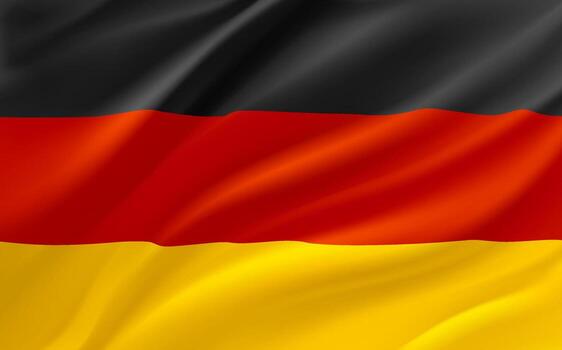
Sending money from Germany to the Philippines involves more than finding the provider with the lowest advertised fee. Actual cost will depend on the exchange rate of EUR to PHP, transfer fee, payment method, delivery rail and payout option. If you want to send money to the Philippines from Germany, it's more useful to compare the final PHP amount than just compare fee amounts.
For the individual, the right option could be bank deposit, mobile wallet or cash pickup. For businesses, marketplaces and platforms, the choice is more complex. They need local payment methods, reliable settlement and compliance and integration infrastructure. This is the space where Germany to Philippines transfers are gradually diverging from traditional correspondent banking.
How do I send money from Germany to the Philippines?
First, if you want to send money from Germany to the Philippines, choose your payout method. You can send money to a supported digital wallet or cash-pickup network, or a Philippine bank account. Next, enter the amount in EUR, provide recipient details, check the PHP amount, exchange rate, fees and delivery estimate and then authorise the transfer.
The simplest workflow is as follows:
- Select a regulated transfer or payment provider.
- Enter the amount you want to send in EUR.
- Choose a Philippines payout method
- Add the recipient’s bank or wallet details.
- Check EUR to PHP conversion and total cost.
- Do any required identity or compliance checks.
- Approve payment and track pay status.
For businesses, however, the process can be incorporated directly into a website or application using a payment API.
Choose the right way to send money to the Philippines from Germany
The delivery method should depend on how the recipient intends to use the money.
Bank transfer: Applicable if the recipient has a bank account in the Philippines. It is convenient for repeated family support, payments to suppliers and larger transfers.
GCash: Great if your recipient uses a mobile wallet. GCash is one of the leading digital payment methods in the Philippines, with TransFi estimating GCash has roughly 89% of the Philippines’ e-money market.
Maya: Another major Philippine digital wallet. It can be relevant if recipients or businesses are already in Maya’s ecosystem.
Cash pickup: Best suited for recipients without reliable access to a bank account or digital wallet. For example, Western Union supports cash pickup, bank and wallet delivery.
Business payout: For platforms that pay freelancers, creators, suppliers or customers, a simple remittance path is not enough. They need local rails. They need automated reconciliation. They need compliance and transaction visibility.
What is the cheapest way to send money to the Philippines from Germany?
In general, there is no cheapest provider, as the total cost depends on amount, payment method, exchange rate and payout method.
A Good comparison is:
Differences in exchange rates can be important. For example, if one quote is PHP 72.47/EUR and the other is PHP 71.43/EUR, the difference is PHP 1.04 per euro. On a EUR 1,000 transfer, that represents approximately PHP 1,040 before considering fees.
That is why the lowest fee does not always lead to the biggest payout.
For instance, Wise says that it prices on the mid-market exchange rate, but the actual fee depends on the route the transfer takes and the way the transfer is funded. Its published examples in the Philippines also indicate different fees for account balances, bank transfers and cards.
So the right comparison is EUR paid against PHP received.
Send money to GCash or Maya from Germany
Digital wallets allow for convenient international payments, eliminating the need for the recipient to wait for a traditional bank transfer or visit a cash-pickup location.
Western Union also supports transfers from Germany to GCash, and says that eligible GCash transfers can be processed in real time, although availability depends on the payment method, recipient bank, security checks and other conditions.
TransFi is a bigger infrastructure play. Its Philippines payment network supports wallets, bank transfers and other local payment methods, and its Europe-to-Philippines corridor connects European funding methods with local Philippine payout networks.
This is especially important for businesses looking to offer receiving money in the Philippines without having to build separate integrations for each local payment method.
What fees and exchange rate apply to EUR to PHP?
The actual exchange rate between EUR and PHP on the date of the transaction will be determined by the provider and might differ depending on the provider, the funding method, the payout method and the promotional offer.
For example, a provider could advertise a low transfer fee but use a less competitive FX rate. Another provider might charge a little more, but have a better conversion rate.
A simple calculation helps:
Recipient amount = EUR sent × EUR/PHP rate − applicable charges
Suppose you send EUR 1,000.
- At PHP 72.47/EUR = PHP 72,470 before fees
- At PHP 71.43/EUR = PHP 71,430 before fees
The rate difference alone is PHP 1,040.
Published quotations should therefore be viewed as illustrations, not as permanent prices. Western Union makes it very clear that its rates and fees vary depending on the payment and payout options.
Which rails deliver to Philippine banks — InstaPay or PESONet?
The Philippines has two major domestic electronic payment rails – InstaPay and PESONet.
InstaPay is built for near real-time transfers and is operational 24/7. The Bangko Sentral ng Pilipinas (BSP) has set the maximum transaction value for InstaPay at PHP 50,000 per transaction. PESONet is for high-value electronic transfers and is available on banking days.
For an international sender, however, the important point is that the EUR payment first has to arrive at the Philippine payout infrastructure. The last local delivery can then use the appropriate domestic rail.
This distinction is important for companies that are building cross-border payment products. They want more than a foreign-exchange provider. They require access to local payment infrastructure.
TransFi: a single API for Germany to Philippines payments
For businesses, sending from Europe to the Philippines is fundamentally different from sending one personal remittance.
A marketplace could owe hundreds of Filipino workers. A SaaS company may need to pay local vendors. A global platform may need to allow customers to fund transactions using familiar local payment methods.
Operational complexity comes with the separate management of each market through their own banks, wallet providers and payment processors.
This is what TransFi solves with a single payment infrastructure. Its platform facilitates bank transfers, wallets, instant payment methods and stablecoin-powered settlement across a range of markets. The company says its infrastructure supports 70+ countries, 250+ payment methods, 40+ currencies and 100+ tokens.
This could mean, for the Philippines corridor:
- Single API: Integrate payment support without building separate integrations for each local method.
- Local payment rails: Where possible, allow bank transfers and digital wallets.
- Stablecoin settlement: Accelerate cross-border settlement using stablecoin infrastructure.
- Transparent pricing: FX and relevant fees are shown before execution.
- Payment tracking: Follow the transaction from beginning to payout.
- Compliance infrastructure: Support KYC/KYB and transaction monitoring needs.
The value of TransFi is not only that it provides another method for money transfer. Its goal is to abstract the complexity of cross-border payment infrastructure behind a single unified integration.
This model lets businesses embed payments in Checkout, build cross-border Ramp flows, or build payout experiences, without managing fragmented payment integrations.
How long does a Germany-to-Philippines transfer take?
Transfer times are highly variable.
Some Western Union Eligible Transactions are eligible for cash pickup within minutes, while bank transfers may take longer. Western Union says bank transfers may take several business days, depending on the transaction.
Digital providers could provide faster delivery for some routes and payment options. Most supported Europe-to-Philippines routes are cleared within minutes to hours using local rails and stablecoin infrastructure, with delivery visibility shown during the transaction, TransFi points out.
The best is to select the exact payment and payout method and then check the delivery estimate.
How payouts land in the Philippines
There are two sides to a cross-border payment.
On the German side, the sender can pay for the transaction by bank transfer or another supported payment method. The recipient needs a local payout mechanism on the Philippine side.
TransFi’s Philippines infrastructure enables bank transfers and wallet transactions. The Europe-to-Philippines corridor is built to link European payment methods to local payout networks.
This local approach matters because recipients usually care how the money arrives, not which intermediary handled the international leg.
The experience of someone receiving PHP in GCash is unlike someone waiting for a correspondent bank transfer. Similarly, a company with 500 recipients that is paying them needs automated payout visibility, not manual reconciliation of each transfer.
Conclusion
How to send money from Germany to the Philippines depends on the recipient, the amount, the urgency and the purpose of the transfer.
Personal remittances: Compare the net amount in PHP after fees and FX conversion. Bank deposits are important for account holders, but GCash, Maya, and cash pickup may be more convenient.
It’s more complex for a business. For them, it’s about local payment options, reliable settlement, compliance, transaction tracking and scalable integrations. One such platform that addresses this infrastructure layer with a single API, local payment rails and stablecoin-powered settlement is TransFi.
When you send EUR to PHP, you should compare the live exchange rate, total fees, payout method, delivery estimate and applicable limits. The headline transfer fee is a fraction of the cost.
FAQs:
1. Can I transfer money from Germany directly to GCash?
Yes. Provider-supported transfers to GCash through EUR to PHP. Availability, costs, limitations and delivery times are subject to the provider and payment method.
2. Can I send money from Germany to a bank account in the Philippines?
Yes. Delivery by bank account is supported by international transfer providers and payment systems. Generally, you will need the bank and account details of the individual you are sending the money to.
3. What is the best rate for sending EUR to PHP?
The best rate is not usually the highest rate advertised. Compare the total PHP you receive after the provider’s fee, FX spread and any other applicable expenses.
4. Is PESONet better than InstaPay?
Yes, typically. InstaPay is a nearly real-time 24/7 service whereas PESONet is for electronic transactions on banking days, the BSP stated.
5. Can businesses pay via TransFi in the Philippines?
Yes. TransFi offers business-quality payment infrastructure such as local payment options, bank transfers, wallets, APIs and settlement powered by stablecoins.
6. How To Send Money From Germany To The Philippines?
Depending on the provider and the path a transaction takes, recipients can use compatible bank accounts or digital wallets. There may also be dedicated collection infrastructure for companies to receive cross-border payments.


.avif)
.avif)

.avif)